Foods That Look Like Organs: Ancient Wisdom or Biological Trap?
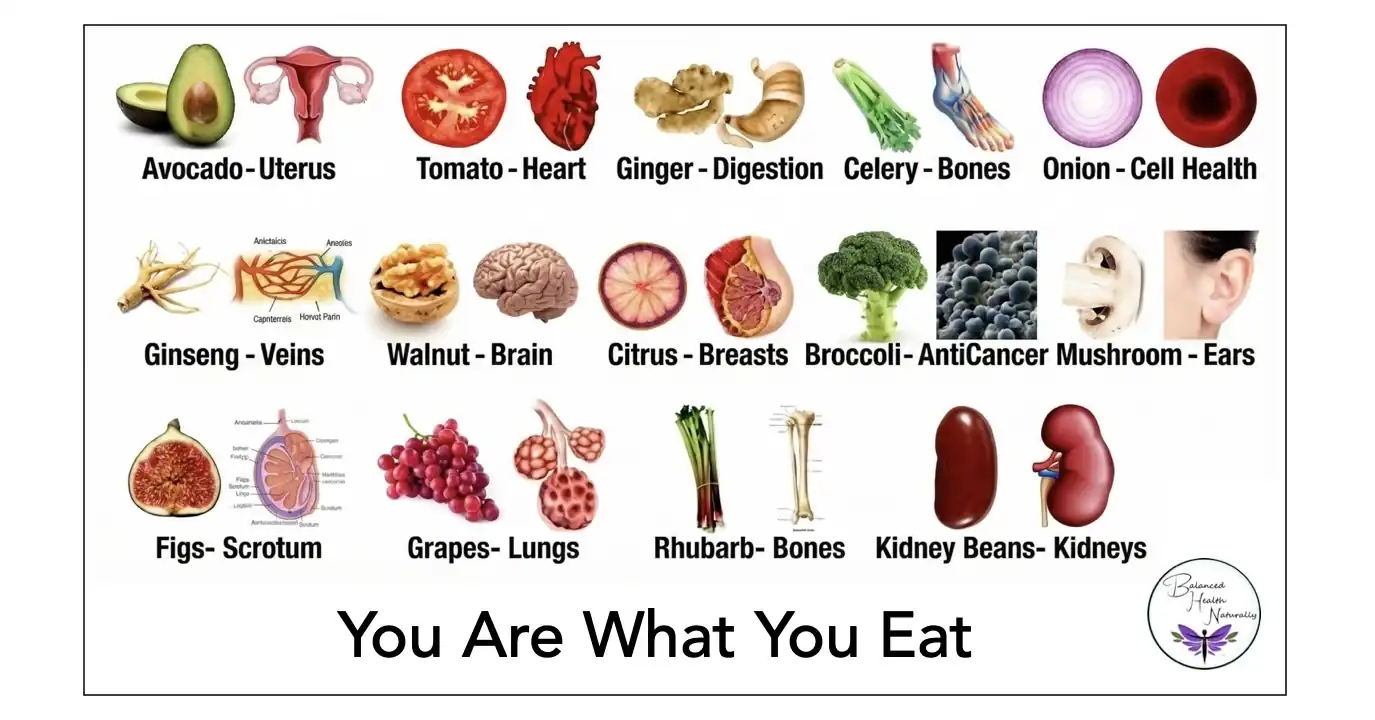
If you’ve ever noticed that a walnut looks remarkably like a tiny brain, or that a sliced carrot resembles an eye, you’re not alone. For centuries, the “Doctrine of Signatures” suggested that nature provides visual clues about which foods support which organs.
But here is the truth that ancient healers missed and it might explain why you still feel exhausted.
While modern science confirms that walnuts do contain brain-supporting omega-3s, and tomatoes do contain heart-healthy lycopene, there is a catch. Just because a food “looks” like an organ doesn’t mean it is biocompatible with YOUR body.
In my clinic, I see women daily who are eating these exact “healthy” foods yet they are suffering from bloating, inflammation, and brain fog. Why? Because even nature’s superfoods can be toxic if they don’t match your unique biochemistry.
Let’s explore the science behind these shapes, and then look at why “generic healthy eating” might be the very thing holding your health back.
Key Points: Foods That Look Like Organs
- Ancient Wisdom Aligns: The Doctrine of Signatures is an ancient concept whose traditional food-organ pairings are often scientifically valid.
- Fascinating Coincidence: The visual similarity is a fascinating coincidence where traditional observation meets modern nutritional science.
- Science-Backed Benefits: The powerful benefit is found in the food’s specific nutrients, such as lycopene in tomatoes for heart health.
- Optimal Metabolic Support: These nutrient-dense whole foods provide essential support for metabolic, hormonal, and cognitive health.
Modern Nutritional Science Connects Traditional Insights
The short answer: whilst the shape itself doesn’t cause the benefit, modern nutritional science has discovered that many of these foods genuinely do contain specific nutrients that support the organs they resemble. This isn’t magic – it’s biochemistry.
For women over 40 navigating perimenopause, menopause, and midlife metabolic changes, understanding which foods actually support which bodily functions becomes even more important. Generic “healthy eating” advice often stops working during this life stage, not because you’re doing it wrong, but because your body’s needs have fundamentally changed.
Let me explain what’s really happening, what the science says, and why personalised nutrition based on your unique biochemistry might be the missing piece you’ve been searching for.
Foods That Look Like Organs: Ancient Wisdom Meets Modern Metabolic Science
What Is the Doctrine of Signatures?
The Doctrine of Signatures is a traditional concept that suggests the appearance, shape, or colour of a plant can indicate its medicinal use. In other words, nature provides visual “signatures” or clues about which foods heal which parts of the body.
This idea dates back to ancient Greece and was particularly popular in European herbal medicine during the 16th and 17th centuries. Herbalists believed that God (or nature, depending on the tradition) had marked plants with signs to guide humans toward their proper use.
Here’s what’s important to understand: whilst the philosophy itself was based on symbolism rather than science, many of the traditional food-organ pairings turn out to be scientifically valid – just not for the reasons ancient healers believed.
The shape doesn’t create the healing property. Rather, these foods happen to contain specific nutrients, antioxidants, and compounds that genuinely support the organs they resemble. It’s a fascinating coincidence that highlights how traditional observation sometimes arrived at the right answers, even with incomplete understanding of the mechanisms.
The Five Most Striking Food-Organ Resemblances (And What Science Actually Says)
Let’s look at five foods that genuinely do look like the organs they support – and examine what modern nutritional science reveals about why they work.
1. Walnuts and Brain Health
The resemblance: A shelled walnut looks astonishingly similar to a miniature human brain, complete with left and right hemispheres, wrinkles, and folds.
What the science says: Walnuts are exceptionally rich in omega-3 fatty acids (particularly alpha-linolenic acid), antioxidants, and polyphenols. Research shows these compounds support cognitive function, may help slow cognitive decline, and reduce inflammation in brain tissue.
The omega-3 content is particularly relevant because the brain is approximately 60% fat, and it requires a constant supply of essential fatty acids to maintain healthy cell membranes and neurotransmitter function.
Why this matters in midlife: Brain fog, memory issues, and difficulty concentrating are common complaints during perimenopause and menopause. Declining oestrogen levels affect cognitive function, and supporting brain health with nutrient-dense foods becomes increasingly important.
2. Carrots and Eye Health
The resemblance: Slice a carrot crossways, and you’ll see a pattern that looks remarkably like the human eye, complete with a pupil-like centre and radiating lines that resemble an iris.
What the science says: Carrots are loaded with beta-carotene, which the body converts into vitamin A – essential for maintaining healthy vision, particularly night vision. They also contain lutein and zeaxanthin, two antioxidants that accumulate in the retina and help protect against age-related macular degeneration.
Why this matters in midlife: Vision changes often begin in the 40s and 50s. Supporting eye health proactively with nutrient-dense foods can help maintain visual acuity as you age.
3. Tomatoes and Heart Health
The resemblance: Cut a tomato open, and you’ll find multiple chambers that mirror the structure of the human heart.
What the science says: Tomatoes are rich in lycopene, a powerful antioxidant that gives them their red colour. Research consistently shows that lycopene supports cardiovascular health by reducing oxidation of LDL cholesterol, supporting healthy blood pressure, and reducing inflammation in blood vessels.
Tomatoes also contain potassium, which supports healthy blood pressure regulation.
Why this matters in midlife: Cardiovascular disease risk increases significantly for women after menopause, when the protective effects of oestrogen decline. Supporting heart health becomes a priority, not an afterthought.
4. Ginger Root and Digestive Health
The resemblance: Fresh ginger root bears a striking resemblance to the human stomach and intestinal system, with its curved, tubular shape and irregular surface.
What the science says: Ginger has been used for centuries to support digestive health, and modern research confirms its effectiveness. Gingerol and other bioactive compounds in ginger help reduce nausea, support healthy digestion, reduce inflammation in the digestive tract, and may help with bloating and discomfort.
Why this matters in midlife: Digestive issues often worsen during perimenopause and menopause. Declining stomach acid production, slower gut motility, and hormonal fluctuations all contribute to bloating, reflux, constipation, and general digestive discomfort.
5. Kidney Beans and Kidney Health
The resemblance: It’s right there in the name – kidney beans are shaped exactly like human kidneys.
What the science says: Kidney beans are excellent sources of plant-based protein, fibre, folate, magnesium, and potassium. These nutrients support healthy kidney function, help regulate fluid balance, and support healthy blood pressure – all of which reduce strain on the kidneys.
However, a crucial note: people with existing kidney disease must be cautious with kidney beans due to their potassium and phosphorus content. This is a perfect example of why personalised nutrition matters – what’s healthful for one person may be inappropriate for another.
Why this matters in midlife: Kidney function naturally declines with age, and supporting these vital organs through nutrition becomes increasingly important, particularly if you have high blood pressure or blood sugar concerns.
Why This Matters Even More in Midlife
If you’re a woman over 40, you may have noticed that foods you once tolerated well now cause bloating, weight gain, or fatigue. You might be eating “all the right things” according to generic healthy eating guidelines, yet still feeling exhausted, foggy, and frustrated.
This isn’t your imagination, and it’s not a failure of willpower.
Here’s what’s actually happening:
Declining Stomach Acid Production
Stomach acid naturally decreases with age, particularly during and after menopause. This means you may not be breaking down and absorbing nutrients from food as efficiently as you once did – even from “healthy” foods.
The nutrients in walnuts, carrots, ginger, and other whole foods only benefit you if your body can actually extract and absorb them.
Hormonal Inflammation
Fluctuating and declining oestrogen levels trigger systemic inflammation throughout the body. This affects everything: your gut, your joints, your brain, your cardiovascular system, and your metabolism.
Anti-inflammatory foods (like those rich in omega-3s, lycopene, and gingerol) become particularly important during this time – not as a “nice to have,” but as essential support for your changing body.
Nutrient Depletion
Years of stress, dieting, digestive issues, hormonal shifts, and normal ageing can leave your body depleted in key vitamins and minerals. When you’re deficient in zinc, magnesium, B vitamins, or essential fatty acids, your metabolism simply cannot function optimally – regardless of how “healthy” your diet looks on paper.
Insulin Resistance and Blood Sugar Dysregulation
Many women develop insulin resistance during midlife, even if they’ve never had blood sugar issues before. This fundamentally changes how your body responds to carbohydrates, including those in otherwise healthy foods like fruit, wholegrains, and starchy vegetables.
What worked at 35 may actively work against you at 50 – not because the food changed, but because your metabolism did.
The Limitation of the “Shape Theory”
Here’s what’s crucial to understand: the visual resemblance is not the mechanism of action.
Ancient healers observed correlations between food shapes and healing properties, but they didn’t understand the biochemical reasons why certain foods supported certain organs. They simply noticed patterns and created a philosophical framework to explain them.
Modern science allows us to go deeper. We now understand:
- Walnuts support brain health because of their omega-3 fatty acid content, not because of their wrinkled appearance
- Carrots support eye health because of beta-carotene and lutein, not because of their circular cross-section
- Tomatoes support heart health because of lycopene and potassium, not because of their chamber-like structure
The shape is coincidental. The nutrients are what matter.
This distinction is important because it prevents us from falling into magical thinking or making unfounded health claims. Food can be powerful medicine – but only when we understand the actual mechanisms involved and apply them appropriately to individual bodies.
The Problem With Generic “Healthy Eating” Advice
You’ve probably heard the standard recommendations:
- Eat more vegetables
- Choose wholegrains
- Reduce processed foods
- Eat healthy fats
- Get enough protein
All of this is sensible, evidence-based advice. So why doesn’t it always work – especially in midlife?
Because not all “healthy” foods are healthy for every body.
Here’s what generic advice misses:
Individual Biochemistry
Your unique metabolic chemistry determines how your body responds to specific foods. Two women of the same age, height, and weight can eat the exact same “healthy” meal and have completely different blood sugar, insulin, and inflammatory responses.
This isn’t a moral failing – it’s biochemistry.
Current Metabolic State
If your metabolism is already dysregulated (insulin resistance, thyroid dysfunction, chronic inflammation), adding more “healthy carbs” may actually worsen the problem, even if those carbs come from wholegrains, fruit, or sweet potato.
Your body’s current state determines which foods support healing and which foods add stress.
Nutrient Deficiencies
If you’re deficient in magnesium, you’ll struggle with blood sugar regulation, sleep, stress response, and energy production – no matter how many vegetables you eat. If you’re low in zinc, your thyroid and immune system won’t function properly. If your B12 is inadequate, your energy and mental clarity will suffer.
Eating “healthy foods” doesn’t automatically correct existing deficiencies, particularly if your digestion is compromised.
Hidden Food Sensitivities
You may be eating foods that trigger inflammation in your specific body – even foods that are generally considered healthy. Common culprits include dairy, gluten, eggs, soy, and even certain vegetables.
This is why personalised nutrition based on testing – not guessing – becomes so valuable.
Why ‘Healthy Foods’ Aren’t Working: The Truth About Personalised Nutrition After 40
If you’ve been eating well, exercising regularly, and still feeling exhausted, gaining weight, or struggling with brain fog, it’s time to stop asking “What’s wrong with me?” and start asking “What does my unique body actually need right now?”
Generic healthy eating advice is built on population averages. It works reasonably well for reasonably healthy people with reasonably balanced metabolisms.
But if your hormones are shifting, your metabolism is stressed, your digestion is compromised, or you’re nutrient-depleted – average advice won’t cut it.
What Personalised Nutrition Actually Looks Like
True personalised nutrition isn’t about eliminating food groups or following the latest trend. It’s about understanding your body’s unique biochemistry through objective data – particularly comprehensive blood testing – and creating a food plan that genuinely supports your metabolism, hormones, digestion, and energy production.
This is the foundation of the Metabolic Balance programme, which I use with my clients here at Balanced Health Naturally.
Rather than guessing which foods might suit you, we use over 36 blood markers to create a personalised nutrition plan based on your actual metabolic chemistry. This isn’t a generic “eat more vegetables” approach – it’s a precise roadmap showing exactly which whole foods, in which amounts, at which times, support your unique body back into balance.
The results speak for themselves: clients release stubborn weight, regain energy, reduce inflammation, and finally feel like themselves again – not through restriction or willpower, but through giving their bodies the specific nourishment they’ve been missing.
Beyond the Food Plan: Addressing Root Causes
Personalised nutrition is powerful, but it’s even more effective when combined with:
- Naturopathic assessment (tongue, nail, facial signs that reveal metabolic function)
- Optimal blood chemistry analysis (not just “within range,” but truly optimal)
- Targeted nutritional and herbal support when needed
- Mindset and behaviour coaching to address emotional eating patterns
- Stress management and nervous system regulation
This is the “Science + Soul” approach I bring to my work: evidence-based nutrition supported by holistic care that addresses the whole person, not just the symptoms.
Real Results: Sarah’s Story
Sarah came to see me at 52, completely frustrated. She’d always been health-conscious – she ate plenty of vegetables, avoided processed foods, exercised regularly, and rarely indulged in treats.
Yet she was exhausted, gaining weight around her middle, struggling with brain fog, and feeling increasingly anxious about her health.
“I’m doing everything right,” she told me. “Why do I feel so awful?”
Through comprehensive blood testing and naturopathic assessment, we discovered that Sarah’s body wasn’t processing many of the “healthy” foods she was eating efficiently. Her blood sugar regulation was compromised, she had several nutrient deficiencies (despite eating well), and her thyroid function – whilst “normal” on standard tests – was far from optimal when we looked deeper.
We created a personalised Metabolic Balance plan based on her unique blood chemistry. Within weeks, Sarah’s energy improved. Within three months, she’d released 8 kilograms, her brain fog had lifted, and her anxiety had decreased significantly.
“I finally understand my body,” she said at her six-month follow-up. “This isn’t another diet – it’s the instruction manual I’ve been missing.”
Sarah’s story isn’t unique. It’s the pattern I see repeatedly with women who’ve been told they’re “fine” but know something isn’t right.
Frequently Asked Questions
Do foods that look like organs actually help those organs?
Many foods that resemble organs do genuinely support those organs – but not because of the resemblance itself. The visual similarity is coincidental. What matters is the specific nutrient composition of the food. Walnuts support brain health because of omega-3 fatty acids, not because they look like brains. Carrots support eye health because of beta-carotene, not because they resemble eyes when sliced.
What is the Doctrine of Signatures in nutrition?
The Doctrine of Signatures is a traditional concept suggesting that a plant’s appearance indicates its medicinal use. Whilst this philosophy was based on symbolism rather than science, many traditional food-organ pairings turn out to be scientifically valid. Modern research allows us to understand the actual biochemical mechanisms – the nutrients and compounds that create the benefits – rather than relying on visual resemblance alone.
How do I know which healthy foods are right for MY body?
Generic healthy eating advice is built on population averages and may not suit your unique biochemistry, particularly during midlife when hormones, metabolism, and digestion are changing. Personalised nutrition based on comprehensive blood testing (such as the Metabolic Balance programme) creates a food plan specific to your metabolic chemistry. This approach identifies exactly which whole foods, in which amounts, support your body back into balance – removing the guesswork and providing a clear, evidence-based roadmap.
Can eating certain foods really improve my thyroid function or hormone balance?
Food can significantly support thyroid and hormone health, but it’s not a replacement for medical treatment when needed. Specific nutrients (selenium, zinc, iodine, omega-3s, B vitamins) are essential for thyroid hormone production and conversion. Similarly, certain foods support healthy oestrogen metabolism and reduce inflammation during perimenopause and menopause. However, individual responses vary greatly. What supports one woman’s thyroid may stress another’s – which is why personalised nutrition based on testing is so valuable.
Why do I feel worse eating “healthy” foods that work for everyone else?
You may have hidden food sensitivities, existing nutrient deficiencies, compromised digestion, or metabolic dysregulation that changes how your body responds to certain foods. Additionally, hormonal shifts during perimenopause and menopause fundamentally alter how your body processes carbohydrates, fats, and proteins. A food that’s generally “healthy” may genuinely not suit your current metabolic state. This doesn’t mean you’re failing – it means you need personalised guidance rather than generic advice.
Is personalised nutrition better than taking supplements?
Food should always be the foundation. Supplements can be helpful to address specific deficiencies or provide targeted support, but they cannot replace a well-designed, personalised nutrition plan. Whole foods provide nutrients in combinations that work synergistically, along with fibre, water, and countless beneficial compounds that isolated supplements cannot replicate. That said, targeted supplementation can be valuable alongside personalised nutrition – particularly when someone is significantly depleted or has increased needs due to stress, medication, or health conditions.
Ready to Discover What Your Body Actually Needs?
If you’re tired of guessing which foods your body needs, frustrated by generic advice that doesn’t work, and ready for a personalised approach based on your unique biochemistry – not someone else’s success story – I’d love to help.
At Balanced Health Naturally, I work with women who know something isn’t right, even when they’ve been told their test results are “normal.” Together, we use comprehensive blood chemistry analysis to create a clear, evidence-based nutrition plan that genuinely supports your metabolism, hormones, energy, and overall wellbeing.
This isn’t another diet. It’s the personalised roadmap your body has been asking for.
Book a free 15-minute discovery call to discuss your health concerns, ask questions about the Metabolic Balance programme, and find out whether personalised nutrition could be the missing piece for you.
You don’t have to keep guessing. You can know – and feel the difference that clarity makes.
Last updated: January 2026

Jeannette Scapens
Jeannette Scapens is a qualified naturopath and Certified Metabolic Balance® Coach based in Seaview Downs, SA, supporting women in her local clinic, and Australia-wide via telehealth.
She specialises in helping women aged 40-60+ navigate metabolic and hormonal challenges like thyroid issues, perimenopause, and stubborn weight gain.
Jeannette's "Science + Spirit" approach blends evidence-based care with mindset support, deeply informed by coaching over 240 clients and her own personal success in overcoming Hashimoto's and releasing 17kg.
Are “Healthy” Foods Making You Sick?
You might be eating walnuts for your brain and tomatoes for your heart—but if your body is reacting to them, they are acting as inflammation triggers, not medicine.
If you are over 40 and dealing with:
- Bloating after “healthy” meals
- Unexplained fatigue or brain fog
- Stubborn weight that won’t budge
- Achy joints or skin rashes
It’s not in your head. It’s likely a Biocompatibility Issue.
We can test over 600+ foods and household items using a simple hair sample to see exactly which foods are inflaming your system—and which ones will help you heal.
➜ Check Your Biocompatibility NowSimple Hair Test | No Needles | Australia-Wide