

Understanding Thyroid Imbalance: Hypothyroidism & Hashimoto’s Explained
Are you waking up exhausted, struggling with weight that won’t budge, or feeling like you are slowly “dissolving”?
You may suspect a thyroid imbalance, or perhaps you have already been diagnosed with a condition like Hypothyroidism or Hashimoto’s Autoimmune Thyroiditis. Many women in midlife are told by their GPs that their test results are “normal,” yet they instinctively know something is wrong. You are not alone, and there is absolutely something you can do to restore your function.
The diagrams below outline the typical differences between Hypothyroid (underactive/slow metabolism) and Hyperthyroid (overactive/fast metabolism). While you may not experience every symptom listed, this visual guide helps identify where your body may be struggling.
How the Thyroid Controls Your Metabolism & Vitality
This small, butterfly-shaped gland sits on your trachea (windpipe), but it punches well above its weight. It is responsible for producing thyroid hormones that control your cellular metabolism—essentially the speed at which your body functions, burns fat, and creates energy.
However, the thyroid is extremely sensitive. Disruption to your thyroid function can be triggered by a “perfect storm” of factors, including:
- Chronic Stress: Probably the most common driver I see in clinic. High cortisol levels suppress thyroid function.
- Environmental Toxins: Exposure to plastics (BPA), perfumes, and endocrine-disrupting chemicals.
- Chemical Exposure: Fluoride, heavy metals, and pesticide/herbicide residues.
- Viral Load: A history of viruses such as Epstein-Barr.
- Nutrient Deficiencies: Lack of specific minerals required to build thyroid hormones (detailed below).
The HPA Axis & Menopause Connection
Your thyroid does not operate in a vacuum. It is part of the delicate HPA Axis (Hypothalamus-Pituitary-Adrenal). When there is an imbalance in one area—such as adrenal fatigue from long-term stress—it often knocks the thyroid and sex hormones off balance as well.
This is particularly common during peri-menopause and menopause. I frequently treat midlife women who find that their thyroid struggles “suddenly” appear during this hormonal shift, leaving them feeling exhausted and overwhelmed.
My Personal Journey: Recovering from Hashimoto’s & Hypothyroidism
I understand exactly what you are going through because I have walked this path myself.
In 2018, I discovered through adding thyroid antibodies test to my Metabolic Balance panel I had Hashimoto’s Thyroiditis (the autoimmune cause of hypothyroidism). At my lowest point, during the preceeding years, which drove me to study Naturopathy, I felt completely depleted. My body was fighting me, and I experienced:
- Severe Fatigue: I had so little energy that I actually had to sit on a stool just to cook my family’s dinner—I felt like I would pass out if I stood up.
- Unexplained Weight Gain: Despite my efforts, I was “puffy,” inflamed, and the weight on the scales keep creeping up and wouldn’t budge.
- Physical Pain: I developed painful plantar fasciitis and suffered from breathlessness due to anaemia.
- Heart Irregularities: I was experiencing frightening heart arrhythmias.
I refused to accept this as my “new normal.” By applying the very same principles I now use in clinic—specifically my own Metabolic Balance Personalised Nutrition Plan combined with targeted nutritional and herbal support—I was able to turn my health around.
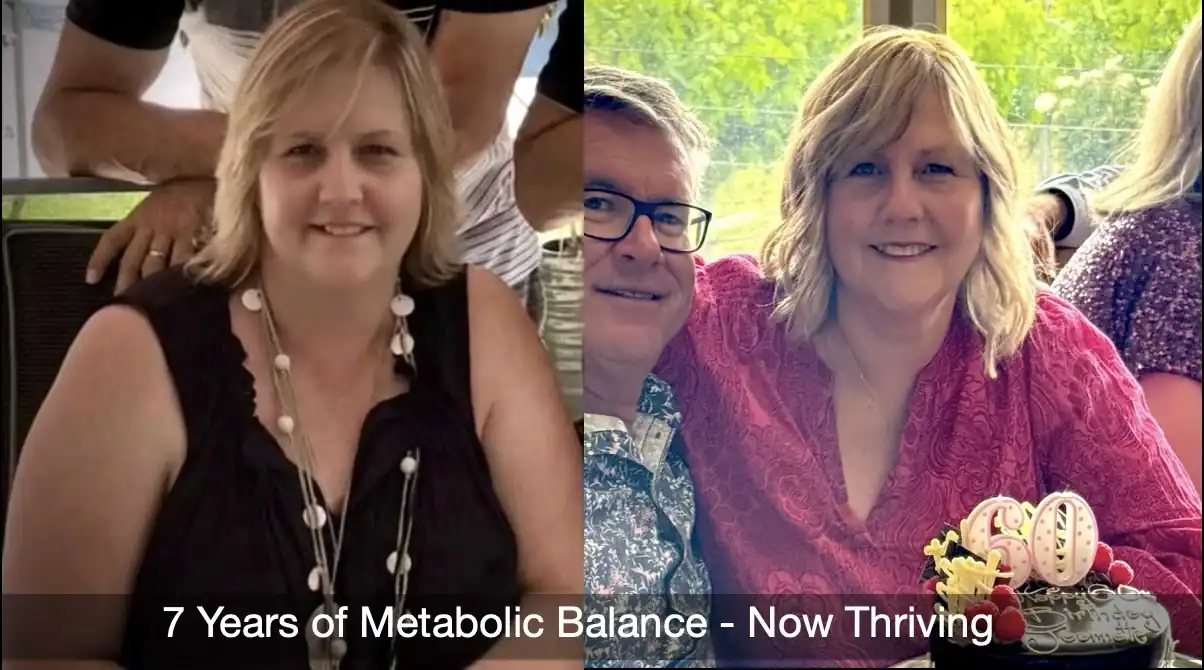
Today, my condition is in remission. My thyroid auto-antibody levels are normal, the plantar fasciitis is gone, and I have released the excess weight. Most importantly, I have the energy and vitality to live my life fully again. If I can do it, you can too.
How to Manage Your Thyroid & Promote Natural Recovery
Thyroid issues are often insidious, going undetected for years because standard medical testing is rarely comprehensive enough and looks at broad ranges of normal not optimal. However, recovery is possible when you address the root causes: autoimmunity, nutrient deficiencies, and lifestyle stressors.
1. Get the Right Testing (Functional vs. Standard)
Many women are told their thyroid is “fine” because their TSH falls within the broad medical reference range (typically 0.5 – 5.0 mIU/L). However, as a Naturopath, I look for optimal function, not just “absence of disease.”
We know that a TSH above 2.0 often indicates a labouring thyroid that needs support. Furthermore, standard tests skip ft4 and Ft3 along with Thyroid Antibodies, meaning an autoimmune condition like Hashimoto’s can be missed entirely.
My approach: I order comprehensive functional testing via I-Screen to see the full picture. If you are unsure where you stand, I can request a complete thyroid panel for you.
2. Dietary Triggers & Nutrition
If your condition is autoimmune (Hashimoto’s), addressing gut health is non-negotiable.
- Remove Inflammatory Triggers: avoiding gluten, processed sugar, and often dairy is essential to heal “leaky gut” and reduce autoimmune antibodies.
- Manage Goitrogens: Be mindful of consuming large amounts of raw cruciferous vegetables (kale, cauliflower, broccoli, cabbage). While healthy, they can block iodine uptake if eaten raw in excess. Cooking or fermenting them significantly reduces this effect.
3. Essential Nutrients for Thyroid Recovery
Your thyroid requires specific raw materials to produce and convert hormones. Deficiencies in the following are common:
- Selenium: Crucial for converting T4 (inactive) to T3 (active hormone). It also helps lower thyroid antibodies.
- Vitamin D: It’s an anti-inflammatory hormone, essential for immune modulation. Most clients with thyroid issues test low in Vitamin D.
- Iron & Ferritin: Required for T3 to enter your cells. If your iron is low, you will feel exhausted regardless of your thyroid levels.
- Vitamin A: Helps thyroid receptors “hear” the hormonal signal and get the hormones into the cells where it should be.
- Zinc & Iodine: The building blocks of thyroid hormone (note: iodine should be used cautiously in Hashimoto’s).
- Herbal Support: Adaptogens like Withania (Ashwagandha), Rehmannia, and Hemidesmus can help modulate the immune system and support adrenal health.
4. Lifestyle Medicine: Stop the “Burnout” Cycle
You cannot supplement your way out of a high-stress lifestyle. Your thyroid is sensitive to cortisol (stress hormone).
- Gentle Exercise: Do not “flog” yourself at the gym. High-intensity cardio can further deplete a struggling thyroid. Switch to more restorative forms of exercise such as walking, swimming, restorative yoga, pilates or strength training.
- Filter Your Water: Fluoride and chlorine are halogens that compete with iodine in the thyroid gland. A high-quality water filter is a simple but powerful switch. I use and recommend Waters Co. filtration systems. Click here for best price.
- Prioritise Sleep: This is your body’s primary repair window.
The Metabolic Balance® Solution
While these general tips help, the most effective path to recovery is a personalised one. Weight loss is often a struggle for hypothyroid women, but it happens naturally when inflammation is reduced and hormones are balanced.
This is where the Metabolic Balance® Program changes the game. By using your unique blood biochemistry to create a nutrition plan, we stop the guessing game. I used this exact method to release 19kg, reclaim energy and put my own Hashimoto’s into remission.
Ready to stop guessing? I have completed advanced certification training with one of Australia’s top and experienced Naturopaths Tara Nelson, in Thyroid Recovery to provide you with evidence-based strategies that work.
Minimising Endocrine Disruptors: A Key to Thyroid Recovery
We live in a chemical-heavy world, facing daily exposure to hundreds of synthetic compounds. This places a significant toxic load on the liver—our primary detoxification organ. When the liver is overburdened, toxins accumulate and disrupt the endocrine system, directly blocking the production and conversion of thyroid hormones.
Common Sources of Thyroid-Disrupting Toxins
Many everyday items act as “endocrine disruptors,” mimicking hormones or blocking their pathways:
- Unfiltered Water: Often contains fluoride and chlorine, which are structurally similar to iodine. They can displace iodine in the thyroid gland, blocking hormone production. Use the best water filters Waters Co. Filtering 99.9% of nasties. Use a filter don’t be a filter!
- Personal Care Products: Perfumes, lotions, and makeup often contain phthalates and parabens. Women are particularly vulnerable due to higher product use.
- Plastics: BPA and other chemicals in plastic containers and cling wrap can leach into food, especially when heated.
- Household Chemicals: Cleaning products, air fresheners, and off-gassing from new furniture or carpets.
- Pesticides: Non-organic produce often carries herbicide and pesticide residues that burden the liver.
8 Simple Ways to Reduce Your Toxic Load
You cannot avoid everything, but you can significantly lower your exposure with these simple swaps:
- Eat Organic Where it Counts: Follow the “Dirty Dozen” (foods with the most sprays—buy these organic) and “Clean 15” (foods with fewer sprays—safe to buy conventional) lists.
- Filter Your Water: Invest in a filter that specifically removes fluoride and chlorine.
- Ditch the Plastic: Store leftovers in glass containers (Pyrex) or stainless steel. Never heat food in plastic.
- Clean Up Your Beauty Routine: Switch to natural or organic personal care products and natural deodorants.
- Go Fragrance-Free: Swap synthetic perfumes for pure essential oils.
- Ventilate: Open windows regularly and “air out” new appliances or furniture before use.
- Choose Whole Foods: Processed foods are often packaged in plastic and contain chemical preservatives. Buying bulk whole foods reduces both waste and exposure.
- Support Natural Detoxification: Consider a supervised naturopathic detox once a year to support liver function. Spring is traditionally the best time for this “reset.”
Start Small: Don’t try to change everything overnight. Pick one category (like your water or your deodorant) this month. Small, consistent changes add up to massive protection for your thyroid over time.
Frequently Asked Questions About Thyroid Recovery
Can I lose weight with Hypothyroidism or Hashimoto’s?
Yes, absolutely. While a sluggish thyroid slows down your metabolism, weight gain is often driven by the secondary inflammation and insulin resistance that comes with it. By addressing the root cause—lowering autoimmune antibodies and correcting nutrient deficiencies—my clients frequently release stubborn weight. Programmes like Metabolic Balance® are specifically designed to reset this metabolic switch.
Why does my GP say my thyroid is “normal” when I feel terrible?
This is the most common frustration I hear. Standard medical testing often looks at a very broad reference range for TSH (0.5 – 5.0). However, many women feel symptomatic if their TSH is above 2.0. Furthermore, standard tests often skip Thyroid Antibodies, meaning early-stage Hashimoto’s can be missed entirely. In Naturopathy, we aim for “optimal” function, not just “within range.” I also look at what’s going on in your body holistically and support where it’s needed.
Do I have to take medication forever?
Medication (like Thyroxine) replaces the hormone your body isn’t making, which is often necessary. However, medication does not treat the underlying immune system attack or the inflammation. My role as a Naturopath is to work alongside your doctor to support your body’s own function, often leading to better energy levels and sometimes a reduction in medication requirements over time (always supervised by your GP).
Ready to feel like yourself again?
You don’t have to navigate this alone. With the right support I look at your unique biochemistry and create a plan that works.